
A U.S.-Based Research Framework for Touchless and Sensor-Driven Systems
Neutral, research-driven guidance for evaluating touchless and sensor-based systems using measurable metrics, structured testing methodology, and U.S. standards alignment.
Purpose of This Reference

This Technical Study Reference establishes a neutral, research-driven foundation for understanding, evaluating, and documenting touchless and sensor-based systems for engineering and operational decision-making.
Definition of Touchless Systems (Technical Scope)

A touchless system detects human presence, motion, proximity, or intent and initiates a response without physical contact between the user and the interface.
Touchless Sensing Modalities

Touchless sensing technologies exhibit different strengths and limitations depending on environment, use case, and regulatory constraints.
Passive Infrared (PIR)
PIR sensors detect changes in infrared radiation caused by moving heat sources, typically the human body.
Ultrasonic Sensors
Ultrasonic sensors emit high-frequency acoustic waves and analyze reflections to infer motion or presence.
Microwave & Millimeter-Wave Radar
Radar sensors emit RF energy and analyze reflections to detect motion, range, and micro-movements.
Active Infrared Proximity Sensors
Active IR uses an emitter/receiver pair to measure reflected infrared light from nearby targets.
Time-of-Flight (ToF) Depth Sensors
ToF sensors estimate distance by measuring the time delay of emitted light returning to the receiver.
Vision-Based Systems
Vision-based sensing uses RGB or depth imaging combined with computer vision inference pipelines.
Core Performance Metrics

Detection metrics
Accuracy metrics
Environmental robustness
Application-specific metrics for hygiene dispensing
Testing Methodology
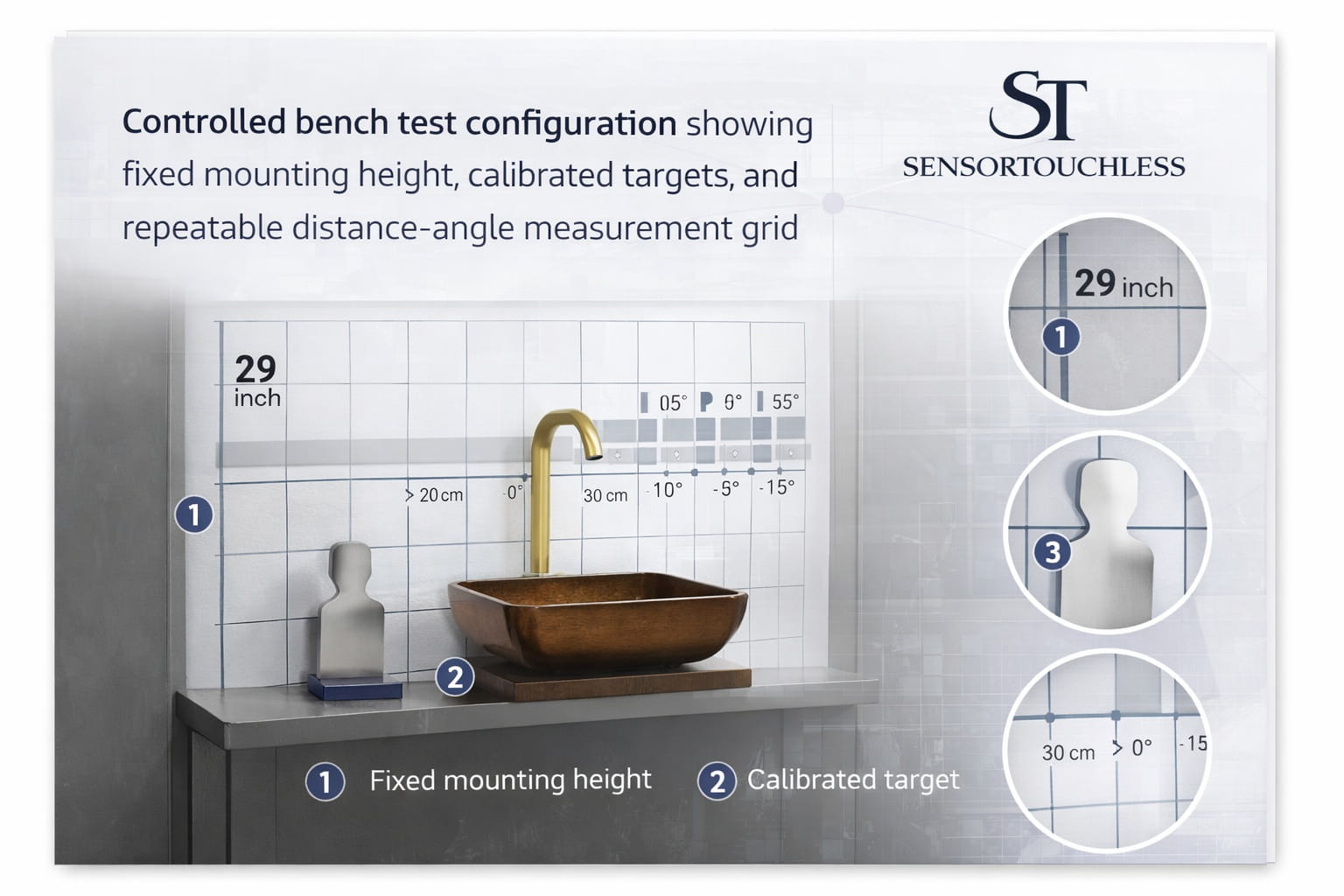
Controlled bench testing
Bench testing isolates sensor performance from user behavior and site variability.
Field testing
Field testing validates performance under real operational conditions.
Comparative evaluation
Application Reference Areas
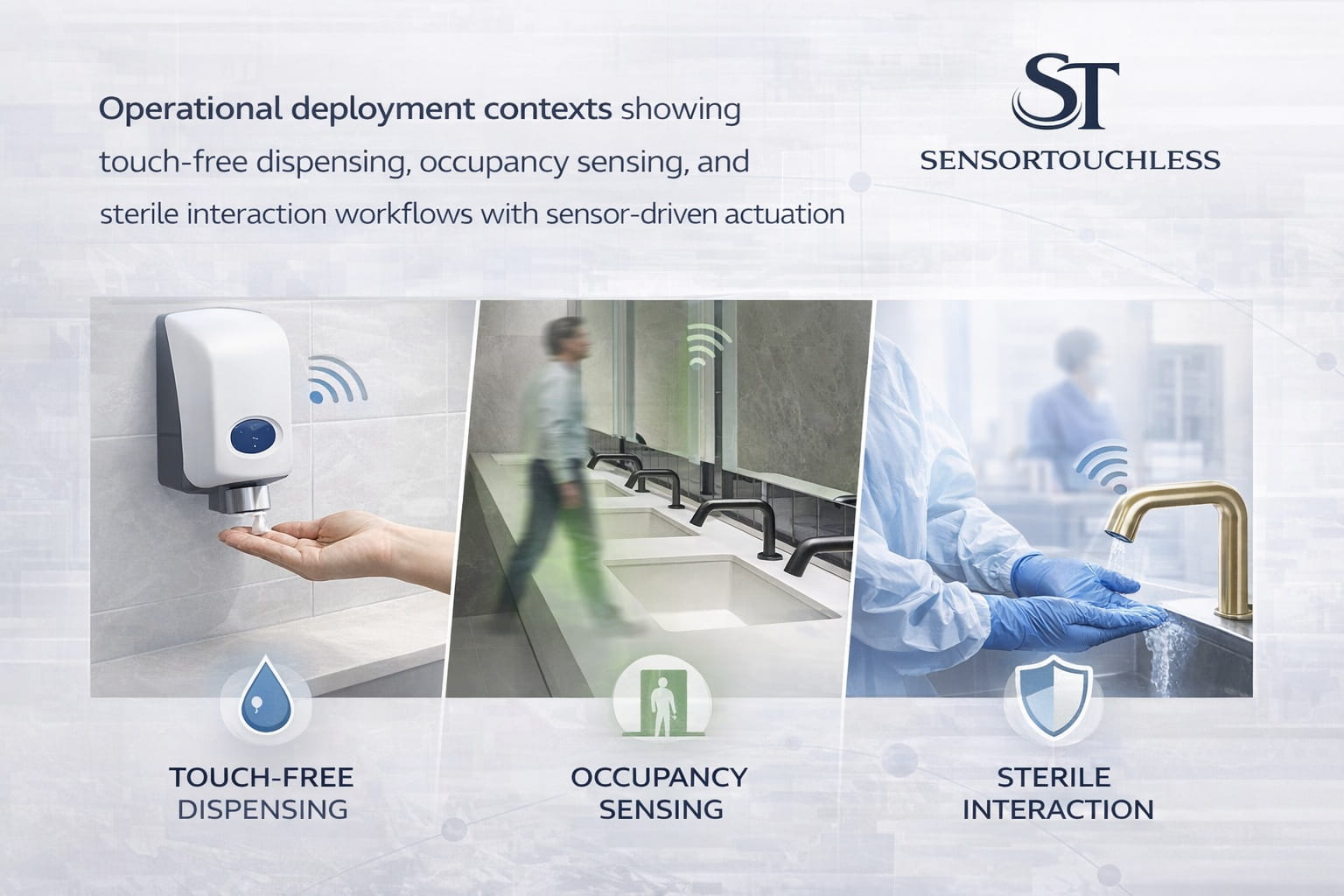
Hygiene and touch-free dispensing
Primary concern: reliable activation and consistent dose delivery.
Occupancy and building controls
Primary concern: accurate detection without occupant discomfort.
Clinical and sterile interaction systems
Primary concern: enabling interaction without compromising sterility or workflow efficiency.
Radar-based presence detection
Primary concern: regulatory compliance and micro-motion sensitivity.
U.S. Regulatory and Standards Foundation
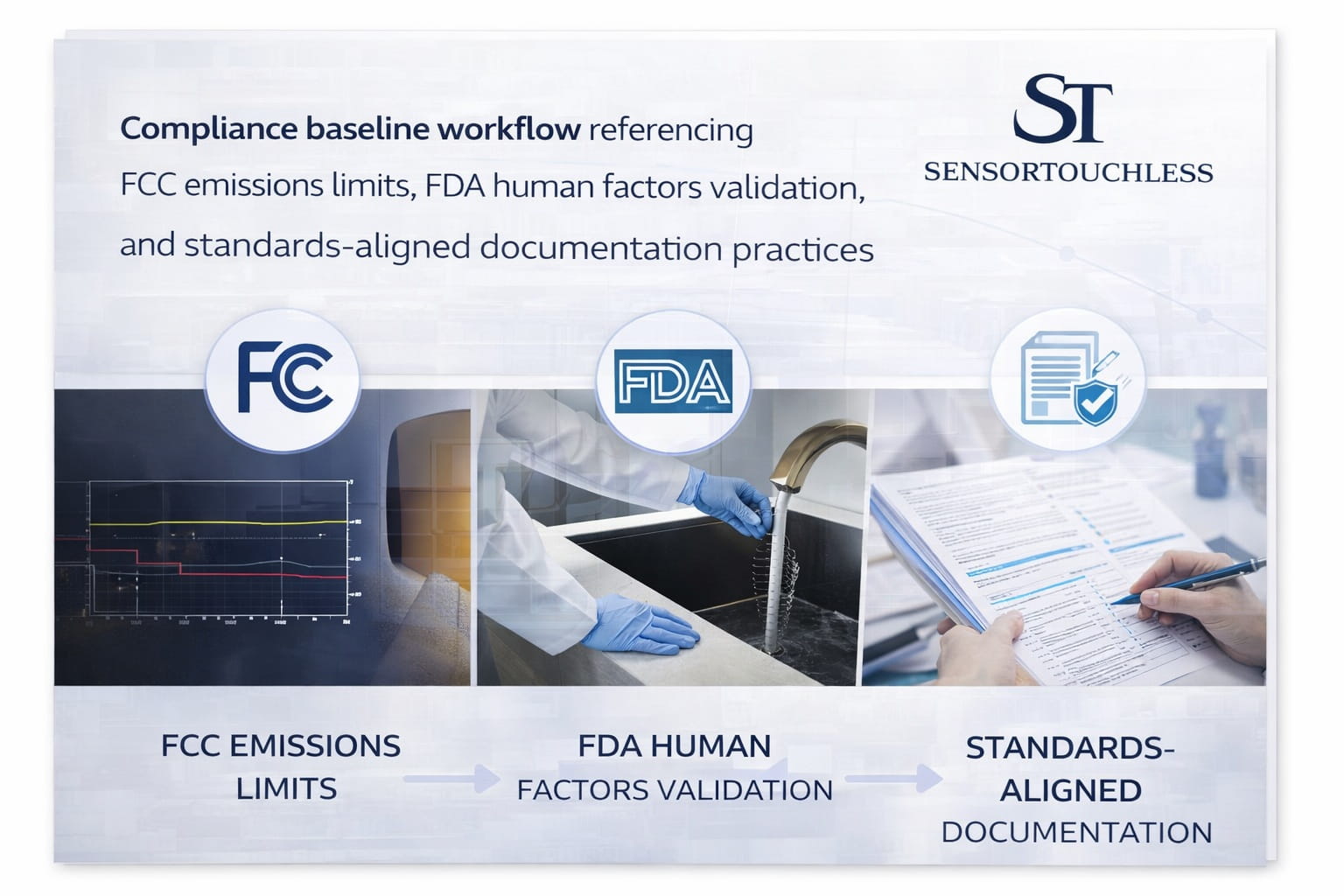
This reference aligns with U.S.-based authorities that define technical and regulatory baselines for evaluating touchless systems across healthcare, public infrastructure, and building environments.
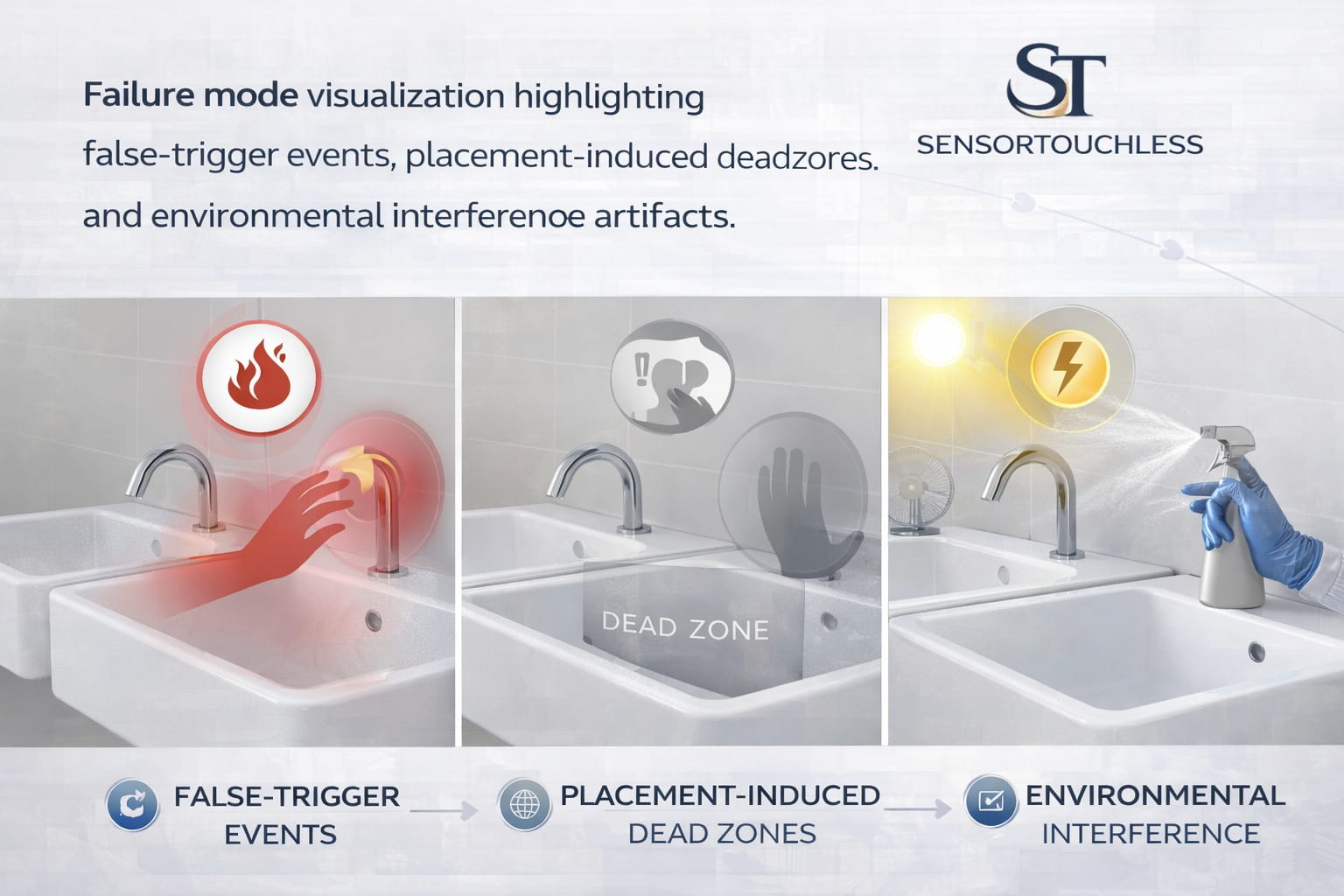
Common Failure Patterns
Reference Reporting Structure
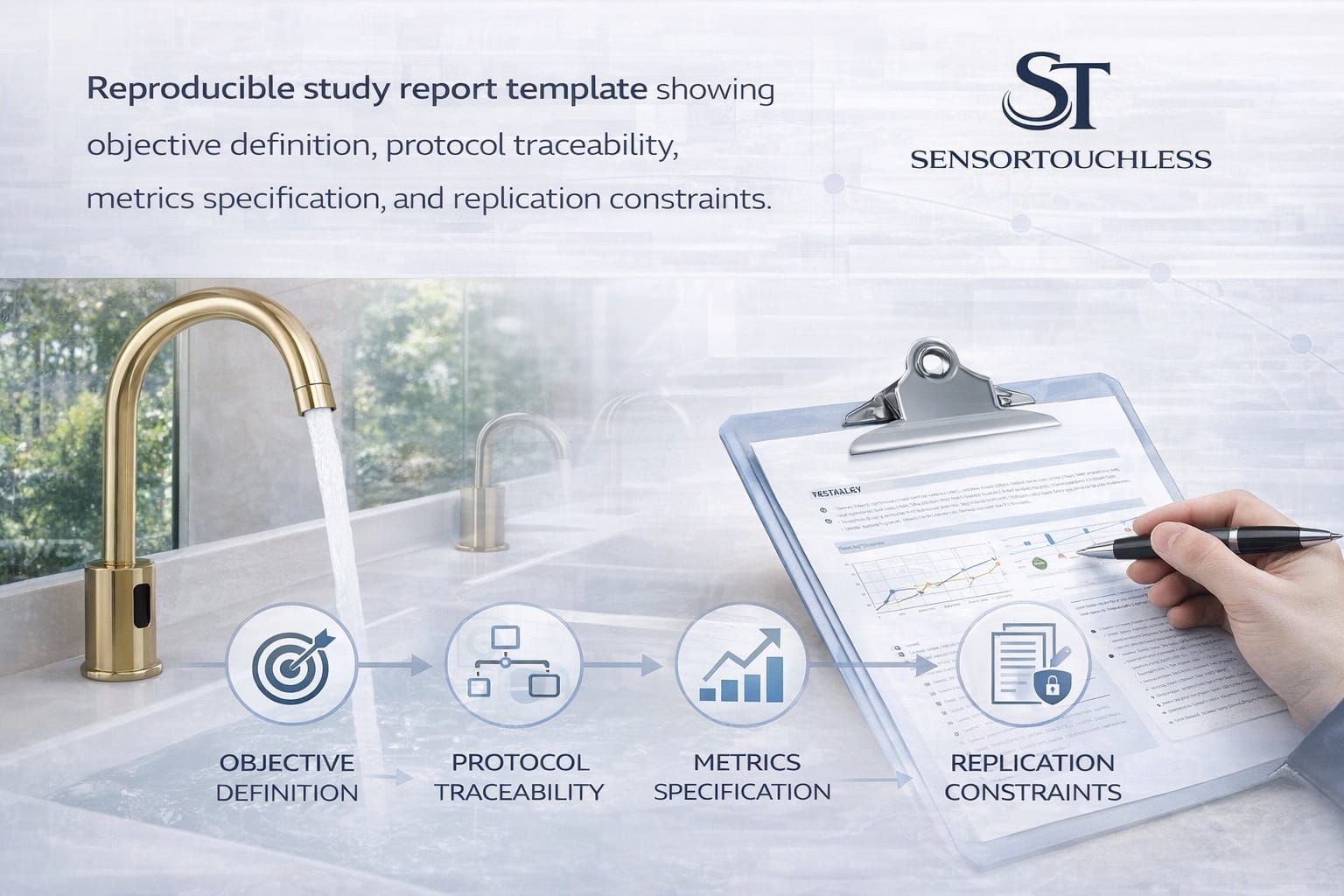
Each technical study published under this reference should include the following elements.
Conclusion
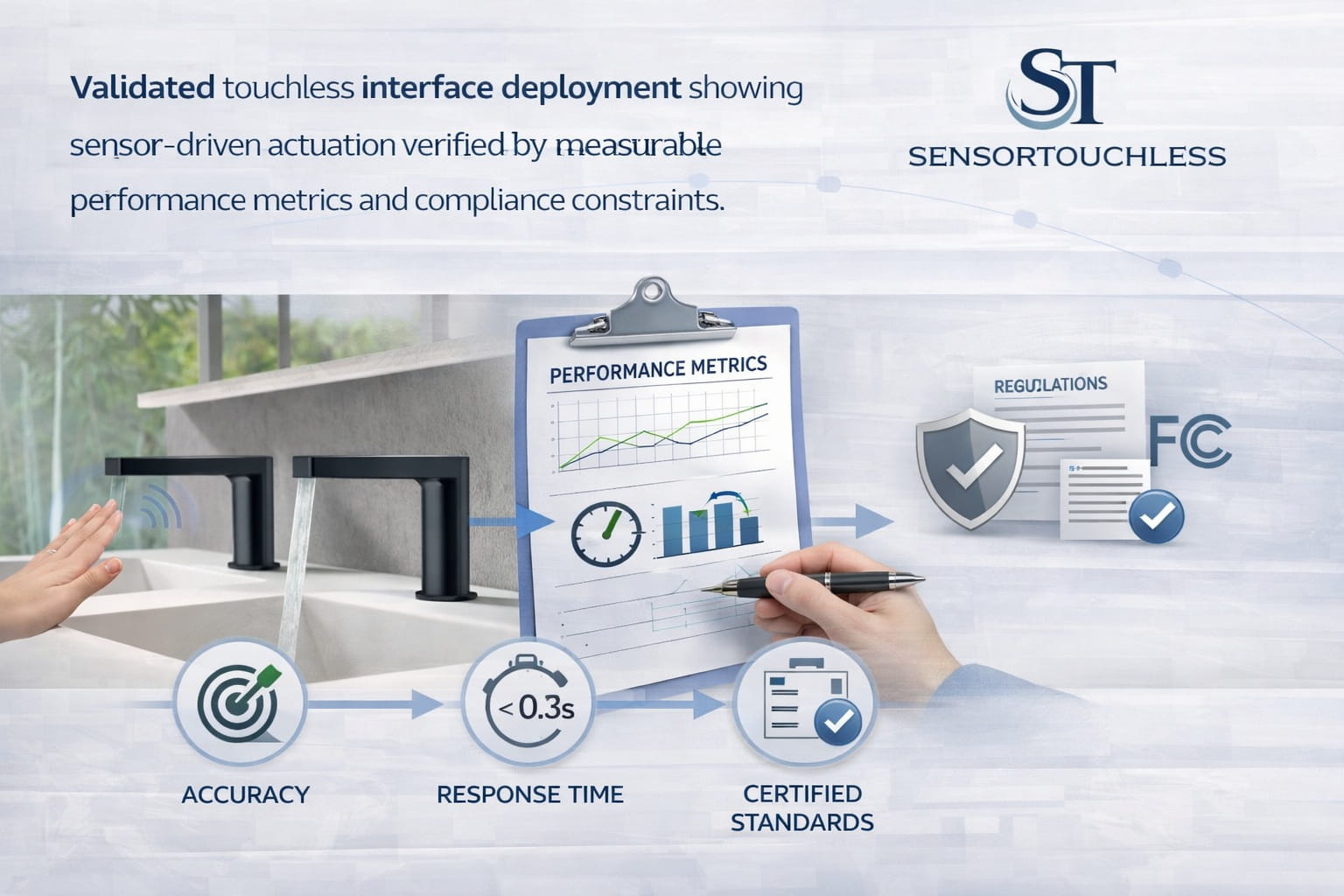
Touchless systems should be evaluated through measurable performance, usability constraints, and compliance, not novelty. This reference provides a consistent framework for interpreting studies and operational data using U.S.-based standards and reproducible methodology.
Future updates can extend this reference as new guidance, peer-reviewed studies, and field datasets become available.