
Fontana Architectural Touchless Bathroom Faucets
Architect-focused guidance for specifying touchless faucets by sensor reliability, installation demands, durability, and high-traffic performance.
Explore Fontana touchless faucet designs built for commercial restrooms, hospitality facilities, office buildings, airports, healthcare environments, and high-traffic public spaces where hands-free hygiene, durable finishes, and reliable sensor activation matter.
Commercial Touchless Faucet Applications
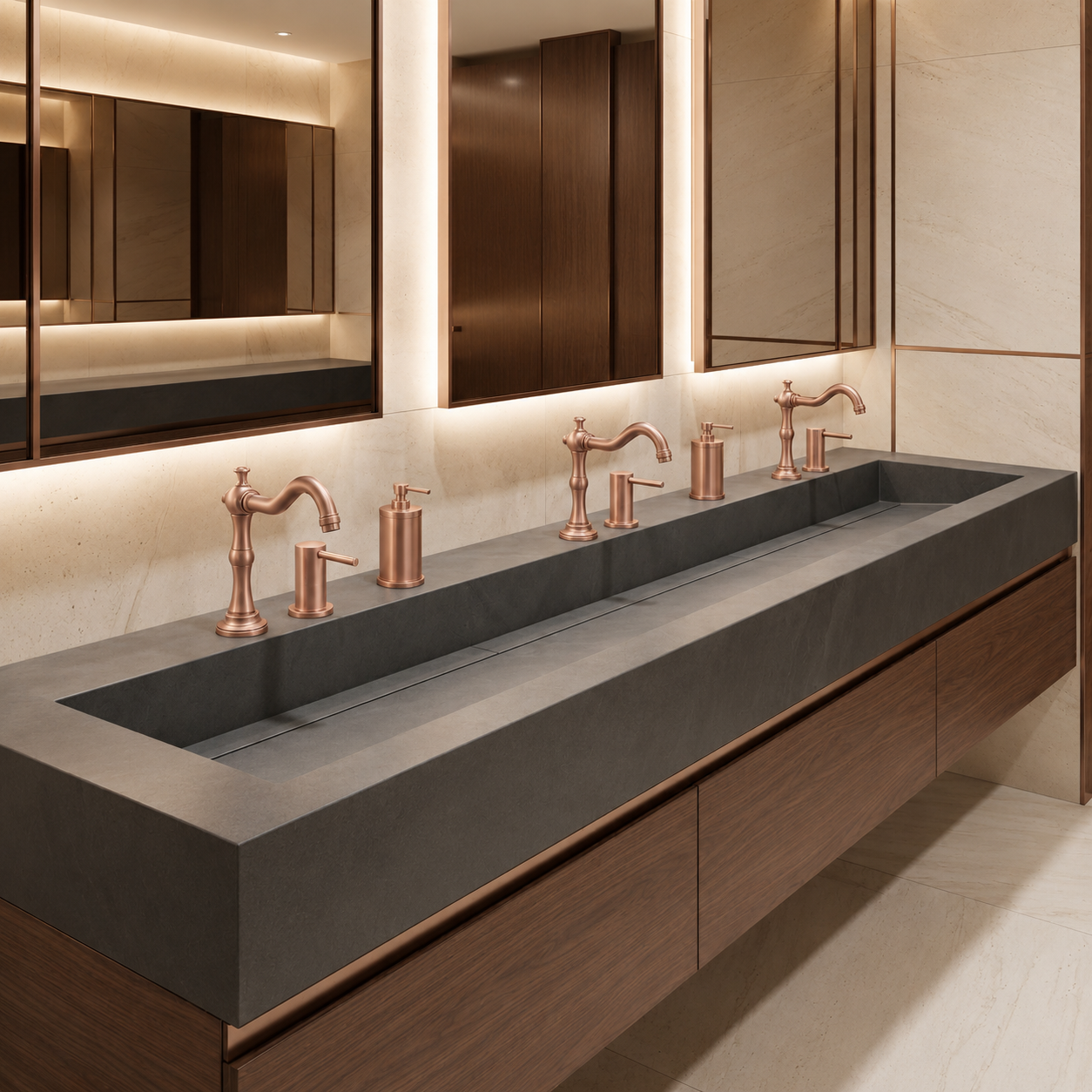
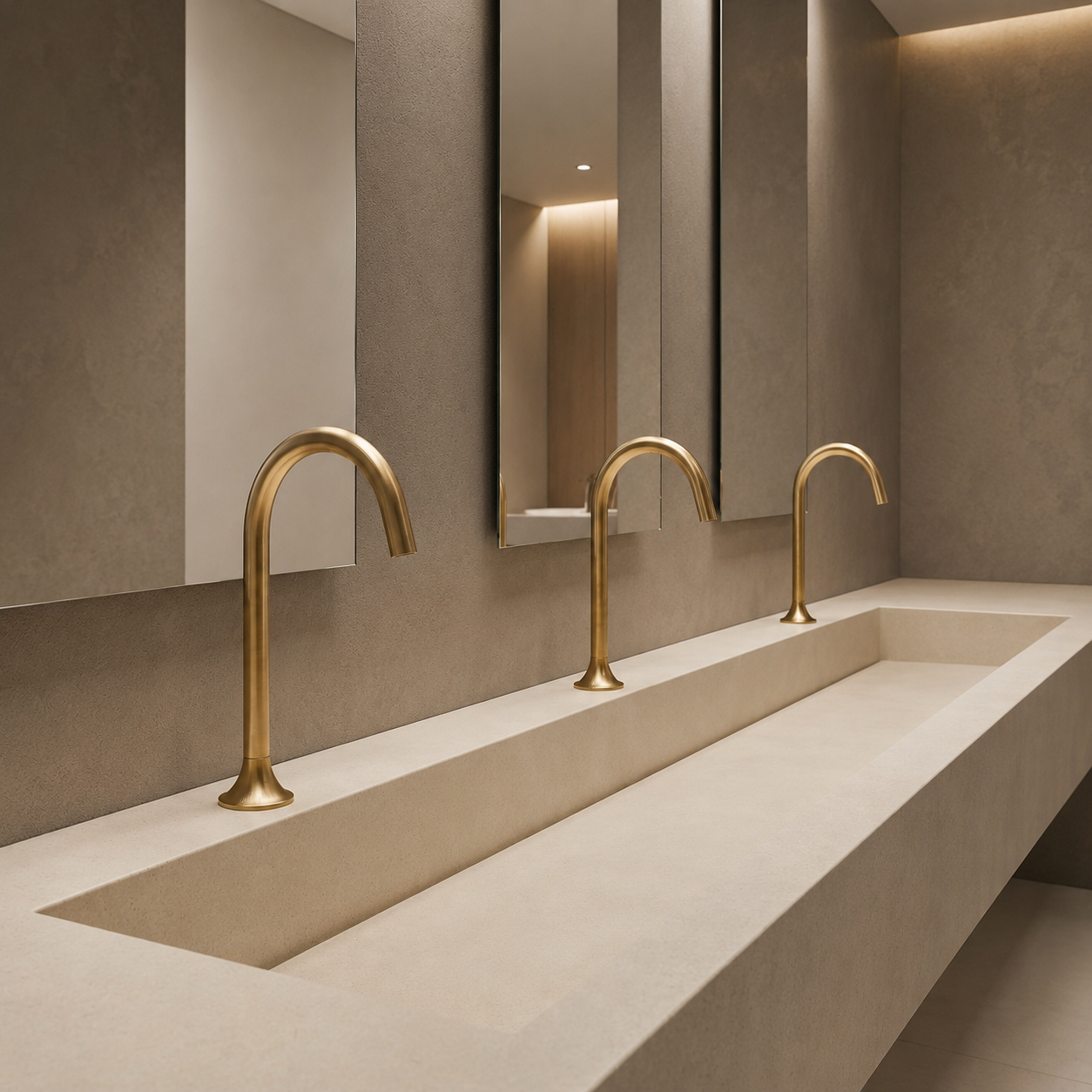
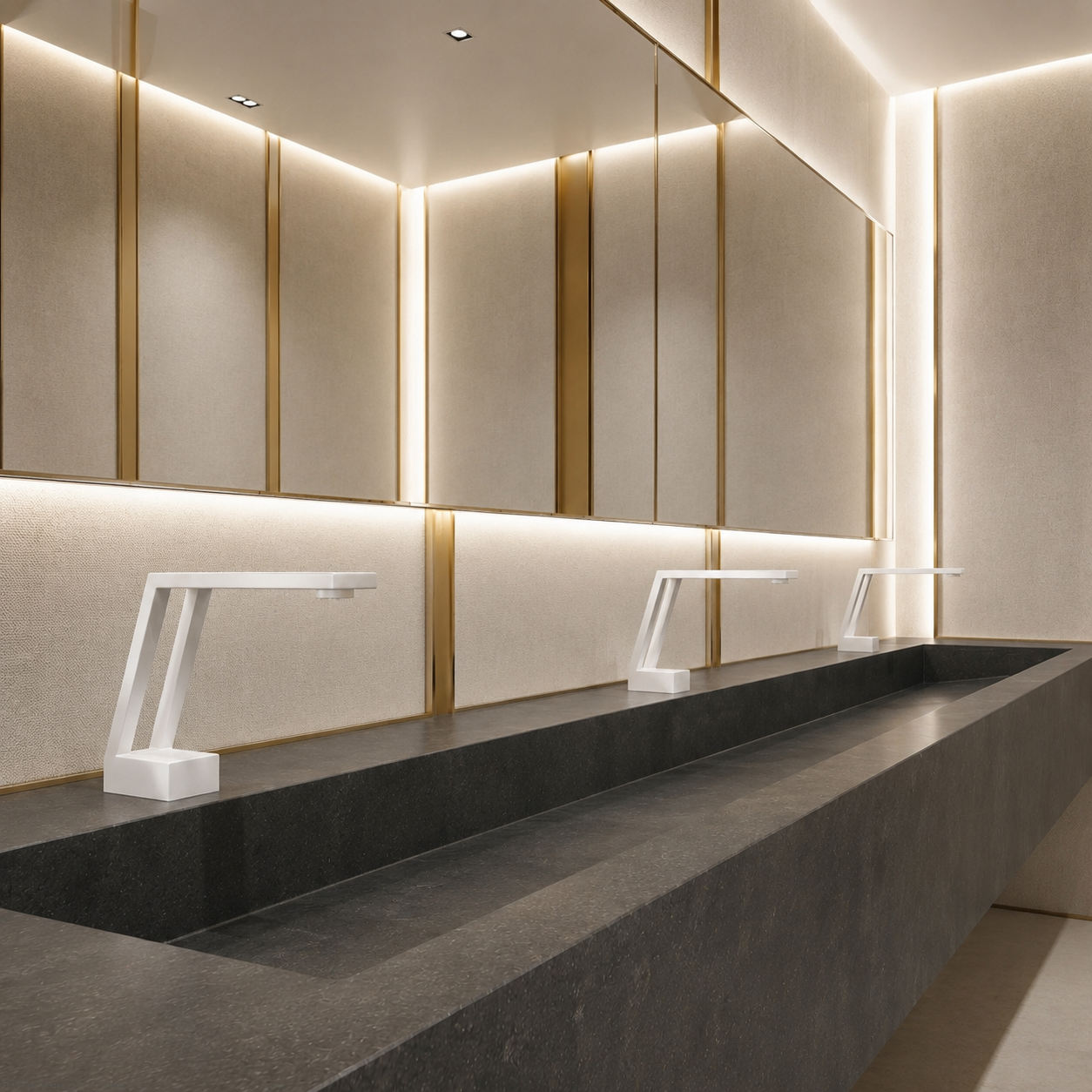
Matte White Touchless Faucet Systems
Designed for high-traffic commercial bathrooms, this Fontana touchless faucet style combines sensor-activated operation, refined fixture geometry, and durable construction for cleaner, more efficient restroom environments.
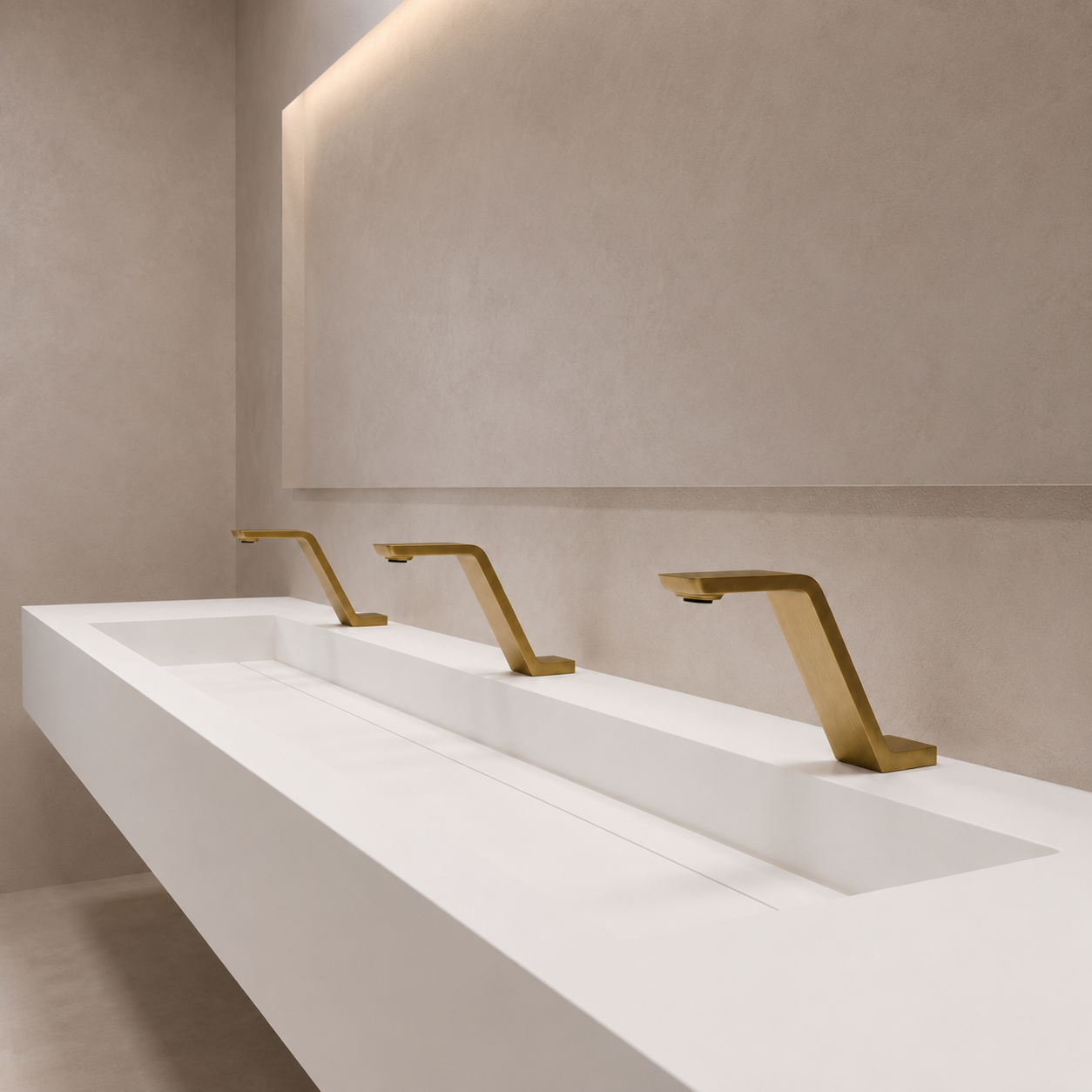
Modern Sensor Faucet Collections
Built for upscale commercial specifications, this hands-free faucet design supports better hygiene, reduced touchpoints, and a coordinated architectural look for hospitality, workplace, public, and institutional restroom projects.
Related Touchless Faucet Resources
Technical, accessibility, water-management, hygiene, and commercial-restroom references for touchless faucet planning.
Understanding Time-of-Flight Technology in Modern Commercial Touchless Faucets
Time-of-Flight (ToF) sensing represents one of the most significant advances in commercial touchless faucet technology. Rather than relying solely on reflected infrared light, ToF sensors calculate the distance between the faucet and the user’s hands by measuring how long a light signal takes to travel to the target and return. This distance-based measurement provides more consistent activation, particularly in challenging commercial environments where reflective surfaces, ambient lighting, water droplets, and varying sink geometries can affect conventional sensor performance. For airports, hospitals, office towers, universities, luxury hotels, and transportation facilities, ToF technology offers an engineering-focused approach to improving reliability and user experience.
Why Time-of-Flight Technology Is Gaining Attention
Traditional infrared sensing continues to perform well in many commercial applications, but Time-of-Flight technology adds an additional level of precision by directly measuring distance rather than relying primarily on reflected light intensity. This helps improve activation consistency while reducing unintended triggering caused by highly reflective countertops, polished finishes, changing lighting conditions, or nearby moving objects.
For mechanical engineers, plumbing designers, and facility managers responsible for high-traffic buildings, more accurate hand detection can contribute to improved water efficiency, fewer user complaints, and more predictable long-term restroom operation.
Selecting Commercial Faucets with Advanced Sensor Performance
When specifying commercial touchless faucets, sensor technology should be evaluated together with valve quality, electronics, finish durability, power configuration, service accessibility, and replacement part availability. High-performance sensing alone cannot compensate for poor engineering elsewhere in the system, which is why many commercial projects evaluate complete coordinated restroom solutions rather than individual fixtures.
As commercial restroom technology continues to evolve, Time-of-Flight sensing is becoming an increasingly attractive option for projects where consistent activation, dependable operation, and reduced maintenance are important long-term objectives.
Related Commercial Sensor Technology Resources
-
Commercial Sensor Technology Guide
Learn how advanced sensing technologies contribute to accurate activation, dependable operation, and efficient water management in commercial restroom systems. -
Commercial Touchless Bathroom Faucets
Review touchless faucet systems engineered for airports, hospitals, office buildings, hospitality properties, universities, and public infrastructure. -
Top-Rated Commercial Touchless Faucets
Compare commercial faucet collections recognized for dependable sensor performance, engineering quality, and long-term operational reliability. -
Quality & Durability Guide
Review engineering design, corrosion resistance, construction quality, finish durability, and lifecycle performance for demanding commercial environments. -
Power Source Planning
Understand how AC, battery, and hybrid power strategies influence reliability, maintenance schedules, and commercial restroom system performance.
Touchless Faucets: Commercial Field Reviews for Architects, Engineers & Facility Teams
Six field-based reviews selected from the FontanaShowers customer review archive, emphasizing sensor reliability, installation context, high-traffic performance, maintenance considerations and commercial restroom suitability.
Selected Professional Touchless Faucet Reviews
These reviews were selected for their project context rather than rating alone. Particular weight was given to comments addressing sensing behavior, water delivery, repeated commercial use, maintenance, specification or installation experience.
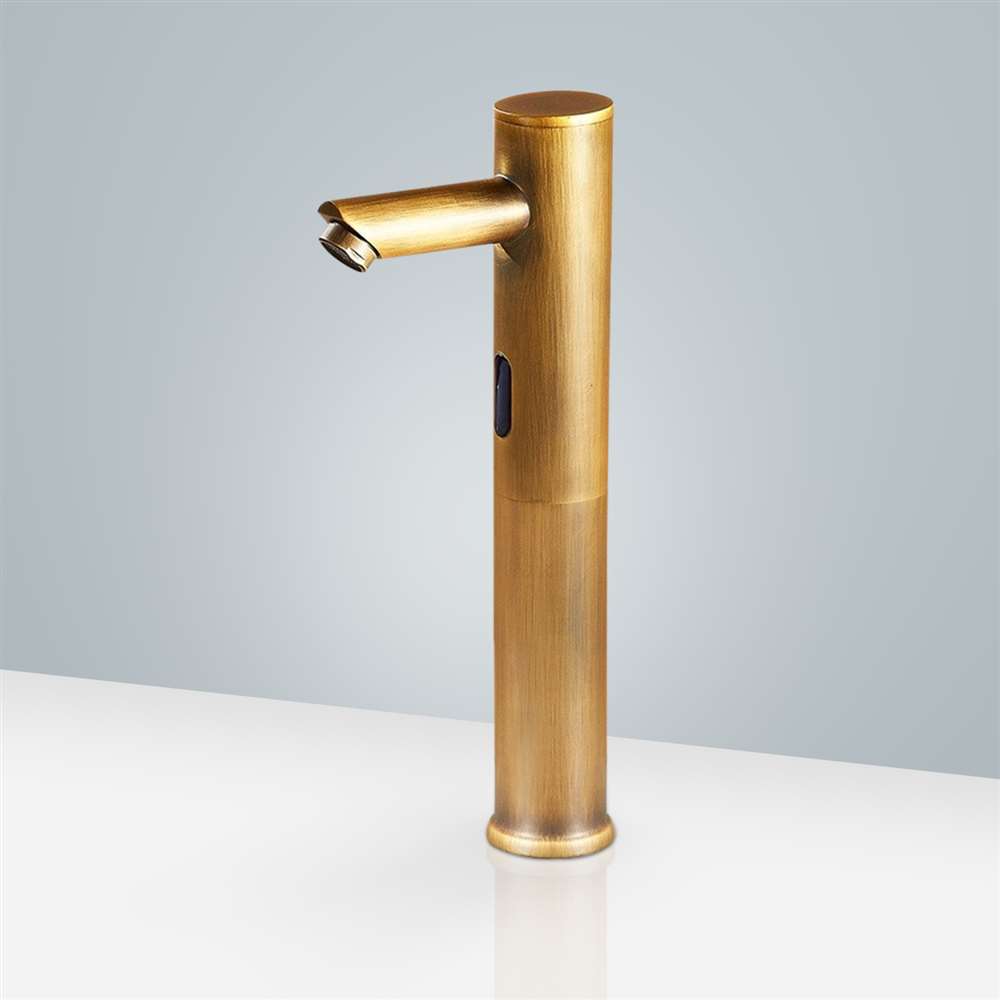
Fontana Antique Gold Commercial Automatic Motion Sensor Faucet
View verified product page →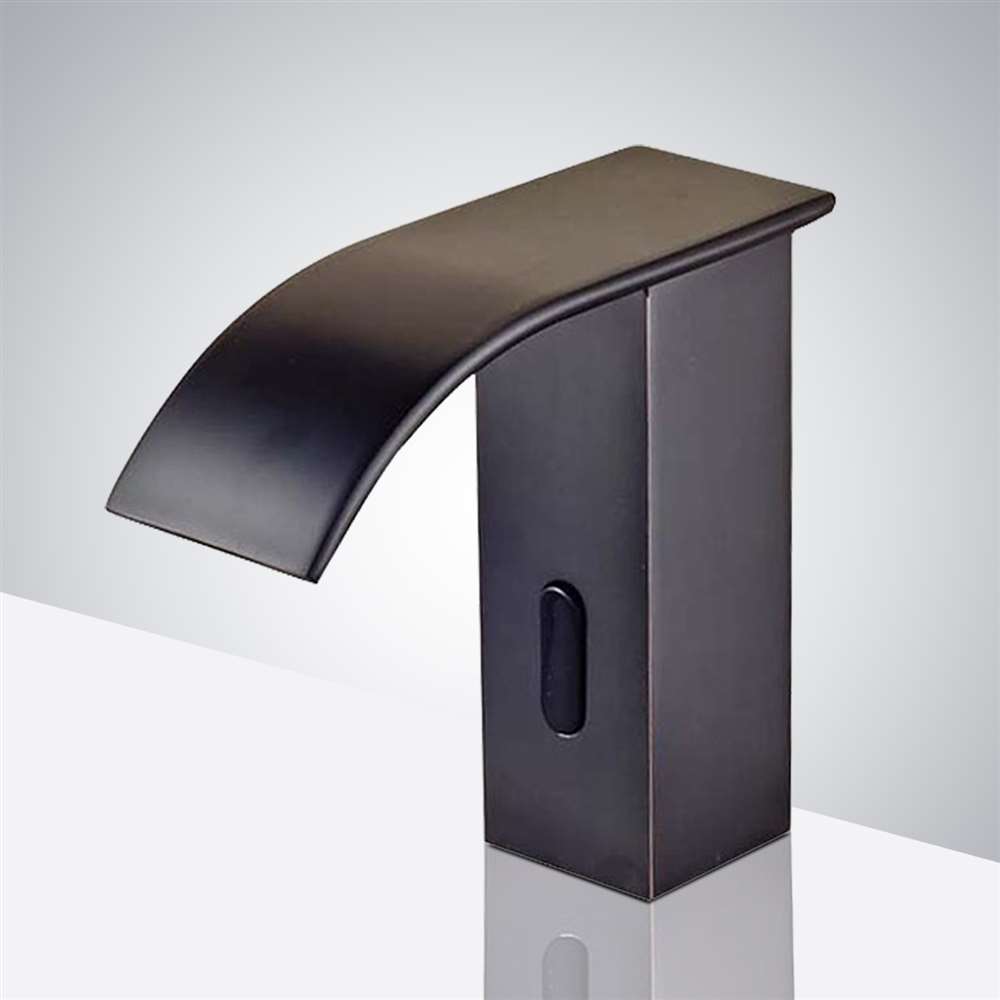
Fontana Matte Black Automatic Sensor Bathroom Faucet
View verified product page →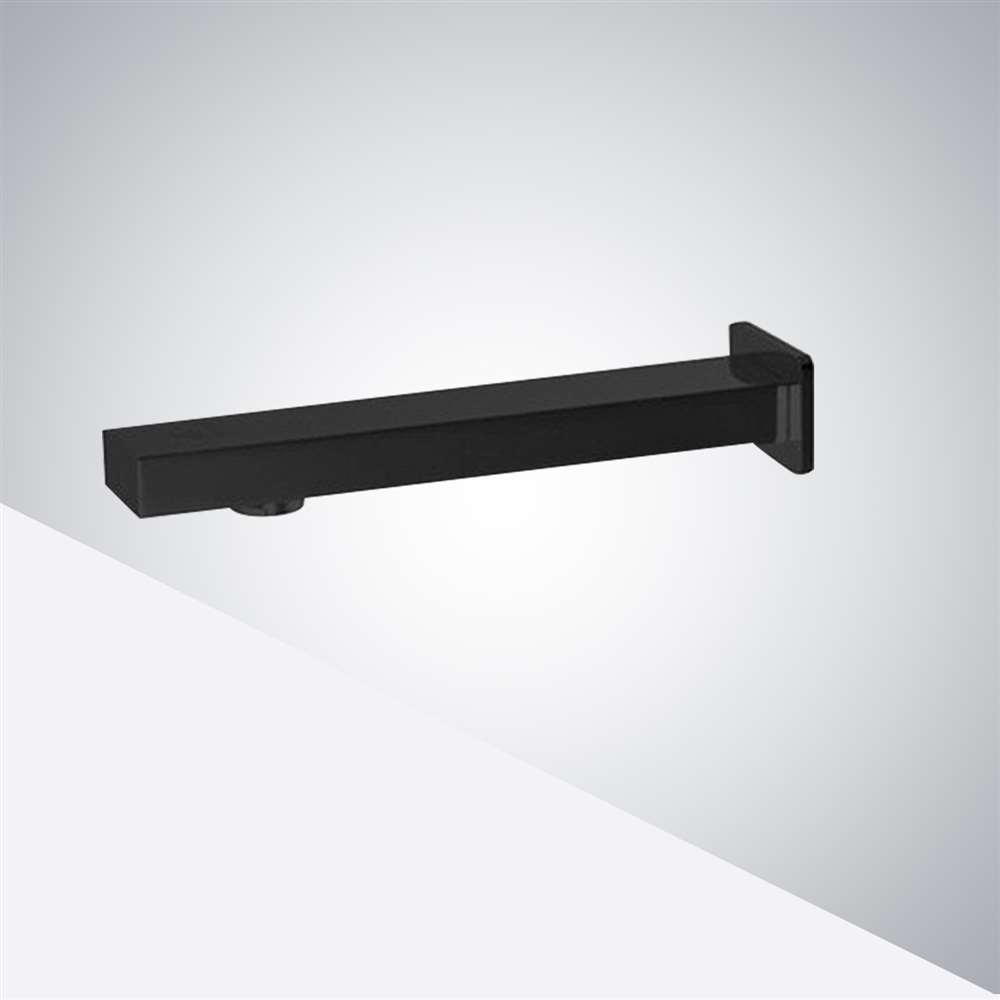
Denver Wall Mounted Square Automatic Matte Black Sensor Faucet
View verified product page →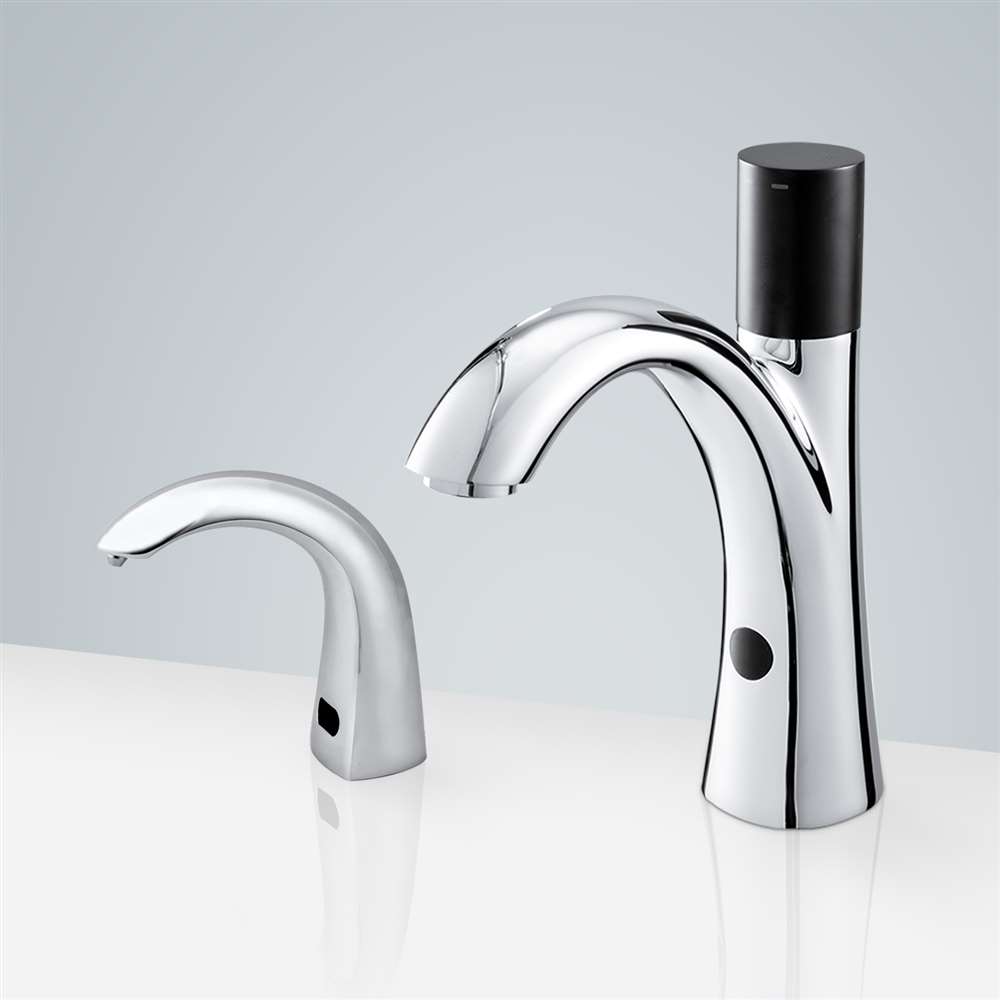
Fontana St. Gallen Motion Sensor Faucet & Automatic Soap Dispenser
View verified product page →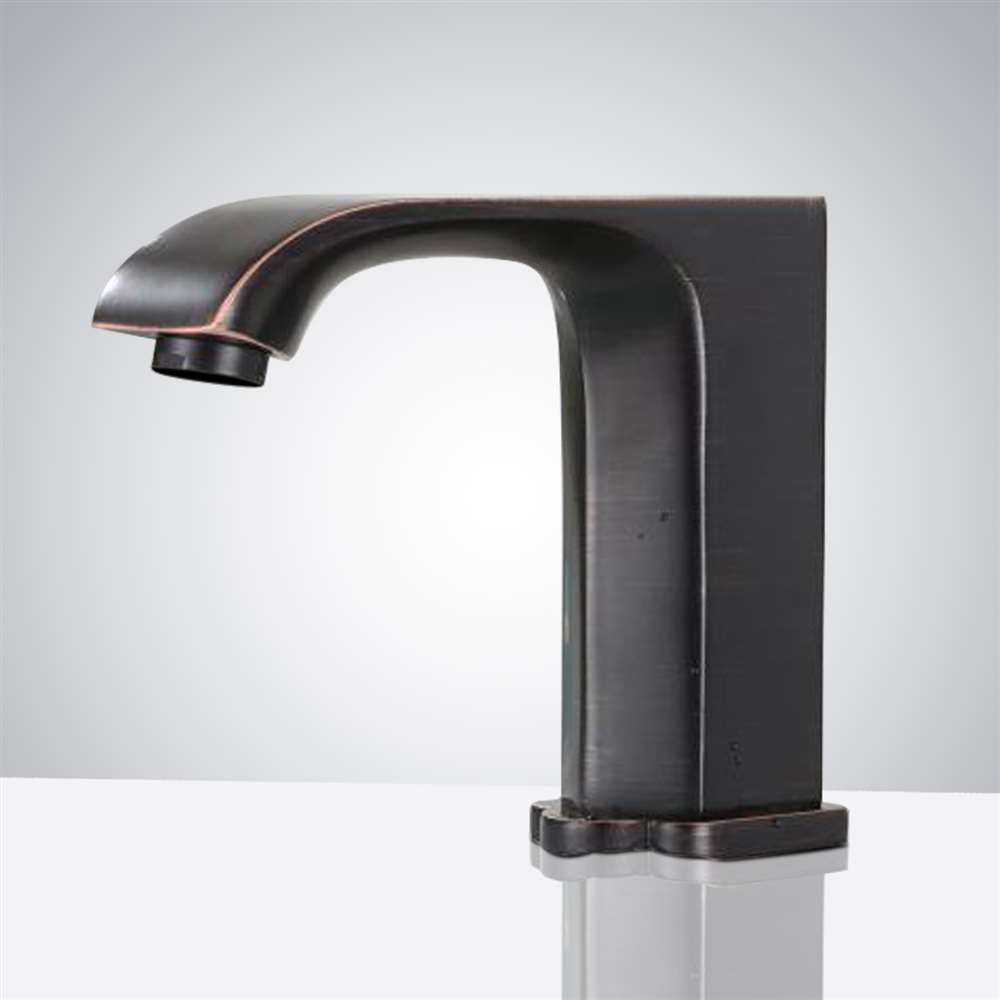
Fontana Commercial Matte Black Automatic Sensor Bathroom Faucet
View verified product page →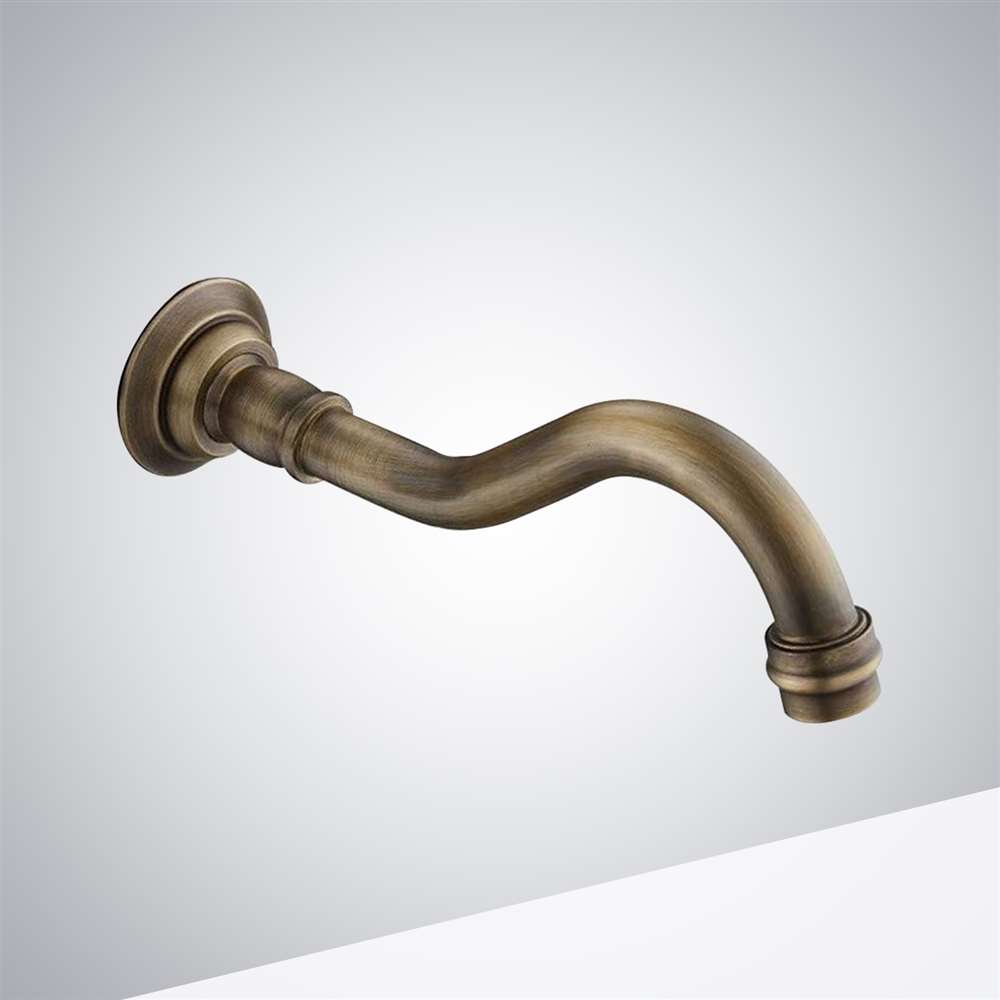
Fontana Antique Commercial Automatic Touchless Sensor Faucet
View verified product page →Professional Review Evidence Matrix
This matrix separates the type of field evidence reported by each reviewer, allowing design and facility teams to compare observations without treating customer testimony as certified laboratory performance data.
| Model | Reviewer Context | Project / Use Environment | Sensor / Operation Evidence | Maintenance / Durability Signal | Specifier Relevance |
|---|---|---|---|---|---|
| FS-389GF | Electrical Technician | Commercial restroom testing | Repeated activation and flow observations | Operational stability under cycling | Sensor commissioning and performance review |
| FS2070 | Design Consultant | Office + hospitality restrooms | Infrared activation and calibration observations | Finish appearance and housekeeping feedback | Design-led commercial restroom selection |
| FS15066 | Metro Facility Services | Commercial facilities | Solenoid and flow-control observations | Low-maintenance and finish commentary | O&M and wall-mount fixture planning |
| FS1831 | Architectural practice | Commercial washroom design | Integrated touchless system evaluation | Durability identified as a selection factor | Coordinated faucet/dispenser specification |
| FS2070-B | Architectural practice | Multi-unit commercial installation | Touchless fixture package | Technical-support and installation coordination | Procurement and specification workflow |
| FS-354-AQDP | Public-space user | High-use public environment | Consistent sensor activation reported | Heavy daily use reported | Public-restroom operational context |
