Wet Room Layouts: What They Demand From Every Fixture
Wet room fixtures must share IP ratings, mounting heights, and sensor calibration to avoid false triggers from shared steam and splash exposure.

Wet room fixtures must share IP ratings, mounting heights, and sensor calibration to avoid false triggers from shared steam and splash exposure.
Coordinating sensor range and timeout settings across faucets, flush valves, and soap dispensers prevents conflicting triggers and keeps the whole restroom functioning as one system.
Mixing minimalist and traditional sensor fixtures works only when each housing matches the mounting depth and electronics space behind the wall or deck.
A guide to retrofitting touchless sensor controls onto existing deck plates by planning hole spacing, power, and sensor range as a system.
Mismatched warranty terms across faucets, flush valves, and dispensers can leave restrooms with uneven coverage unless aligned during procurement.
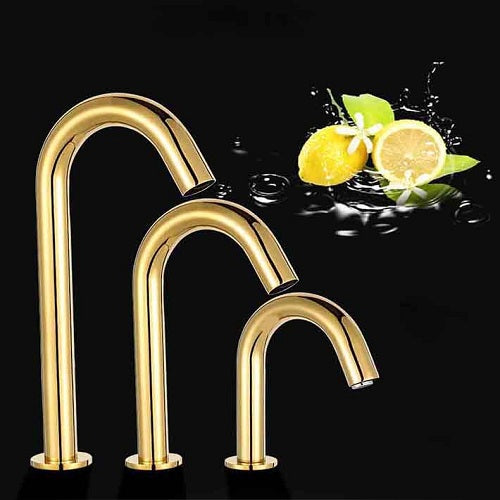
A curated roundup of 7 motion sensor faucets from one catalog, organized to help specifiers build a complete touchless restroom.
Touchless restroom power works best as one coordinated plan across faucets, flush valves, and dispensers, not separate fixture-by-fixture choices.
AEC TECHNICAL GUIDE Architecture · Engineering · Construction Specification integrity · Commercial restroom design Preventing Contractor Substitution Risks Through Better Product Design Reliable performance, installation efficiency and dependable manufacturer support…
Because faucets, flush valves, and dispensers come from different manufacturers and finishing processes, matching finishes requires specifying by substrate rather than trusting shared names like brushed nickel.
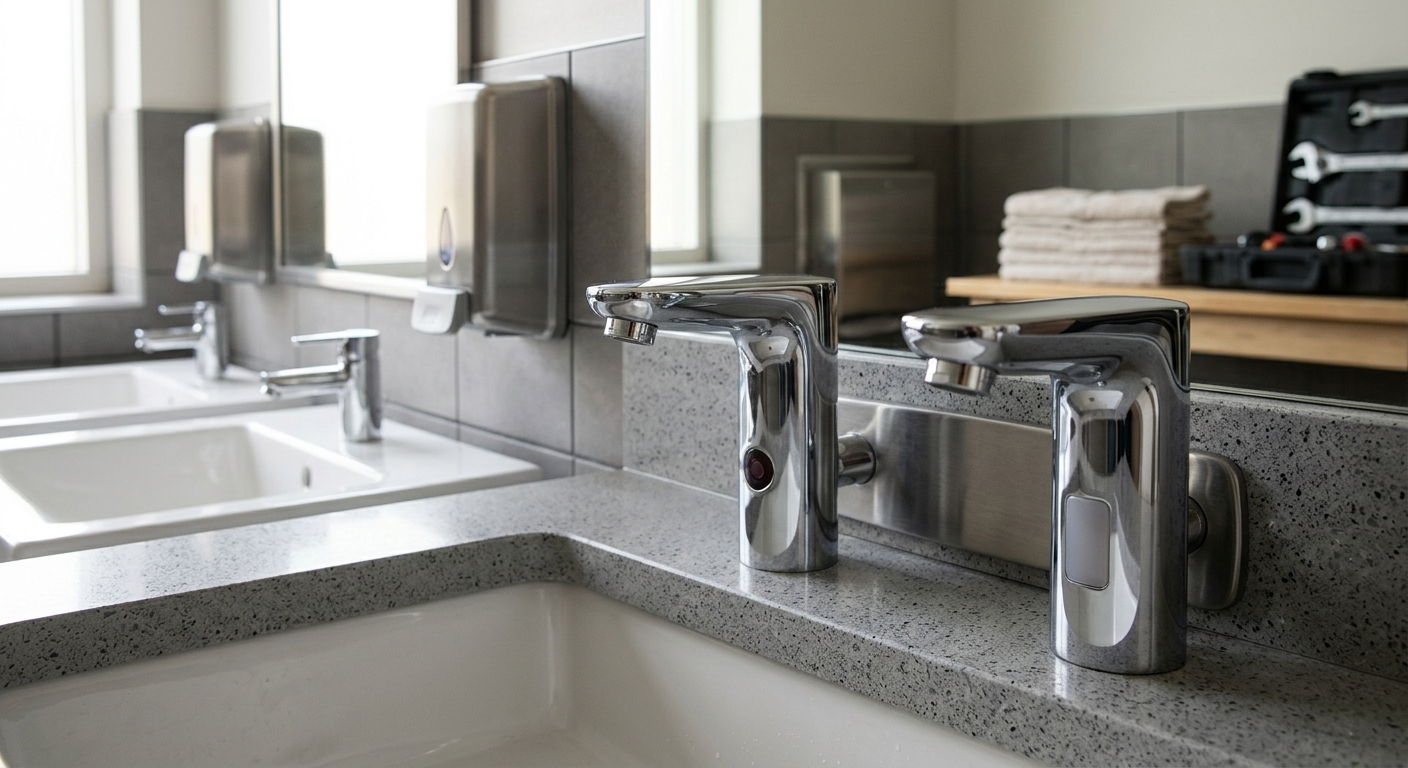
Infrared suits most faucet retrofits, but capacitive sensing fits integrated solid-surface counters, making whole-restroom sensor consistency the real design challenge.